
Koperativa, a creative and communications agency based in Prishtina, Kosovo, produced the creative content for the Intake 2027 student recruitment campaign of InnoEnergy Masters+, a set of five two-year master’s programmes in energy engineering. InnoEnergy is supported by the European Institute of Innovation and Technology (EIT). This is what the work taught us about marketing higher education, and about learning five engineering subjects well enough to promote them.
Most marketing sells things people can test. You try a product, you return it, you cancel a plan, you move on next month if it was not for you. Education does not work like that. When someone chooses where to study, they are choosing a part of their future. They give years of their life and a large amount of money, and they commit before they can know whether the choice was right. By the time they find out, they are already taking the classes and meeting their professors.
That one fact should change how anyone approaches communication for a school, a university or a programme. You are not nudging someone toward a small, reversible decision. You are standing next to them while they make a big one. People in that position behave differently. They stop reacting to clever lines, strong hooks and nice designs, and they start looking for reasons to trust you. Persuasion does less work here than most marketers expect. Trust does almost all of it, and once it is there, everything else gets easier.
Trust is built on specifics
A prospective student has usually read a dozen programme pages that all promise the same things: excellence, opportunity, a bright future. Those words have stopped meaning anything, because everyone uses them. What cuts through is the concrete detail of what you will actually study, where, who you will learn beside, and what people did after. The job of education communication is to replace vague ambition with real information, and to do it in a way that still feels human.
We saw this closely while producing the student recruitment campaign for InnoEnergy Masters+ Intake 2027. Masters+ is made up of five master’s programmes in energy engineering: Renewable Energy, Sustainable Energy Systems, Smart Electrical Networks and Systems, Advanced Energy Systems and AI, and Nuclear Energy. Each one runs over two years in two European countries, and graduates leave with two master’s degrees. The programmes had real, specific things to say, and most of our work was getting those specifics in front of the right person at the right moment, instead of reaching for the aspirational language every other institution leans on.
InnoEnergy works with a clear rule: every claim and every number in the campaign had to trace back to an approved source, and anything that could not was left out. That discipline made the campaign better. It is exactly what a careful applicant does when they read the small print, so the campaign was built to pass that test before anyone ran it.
How our team learned five engineering subjects
Then there is the subject matter. Masters+ is five degrees, and each one is a field engineers spend whole careers in. Our team writes, designs, films and edits for a living. None of us studied energy engineering. Before we could promote these programmes, we had to understand them well enough to explain what a student actually does in each one, and why someone would choose one over another.
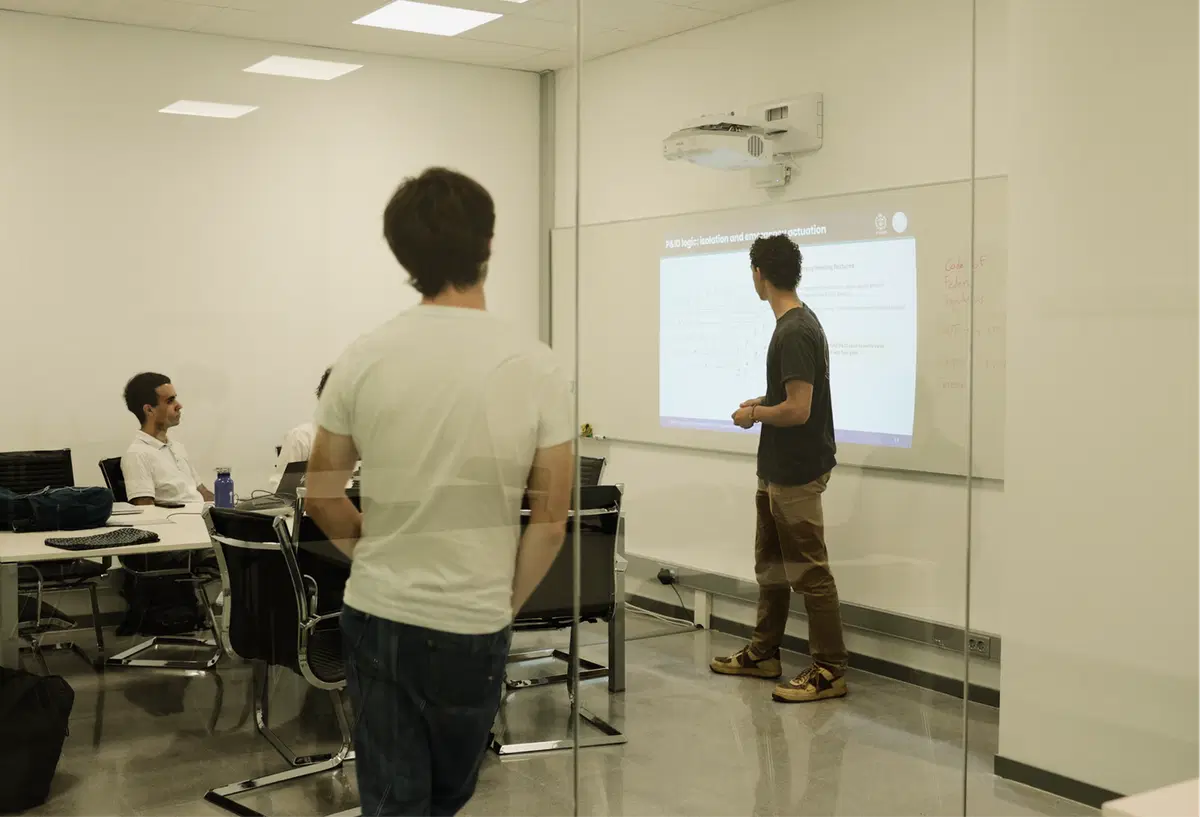
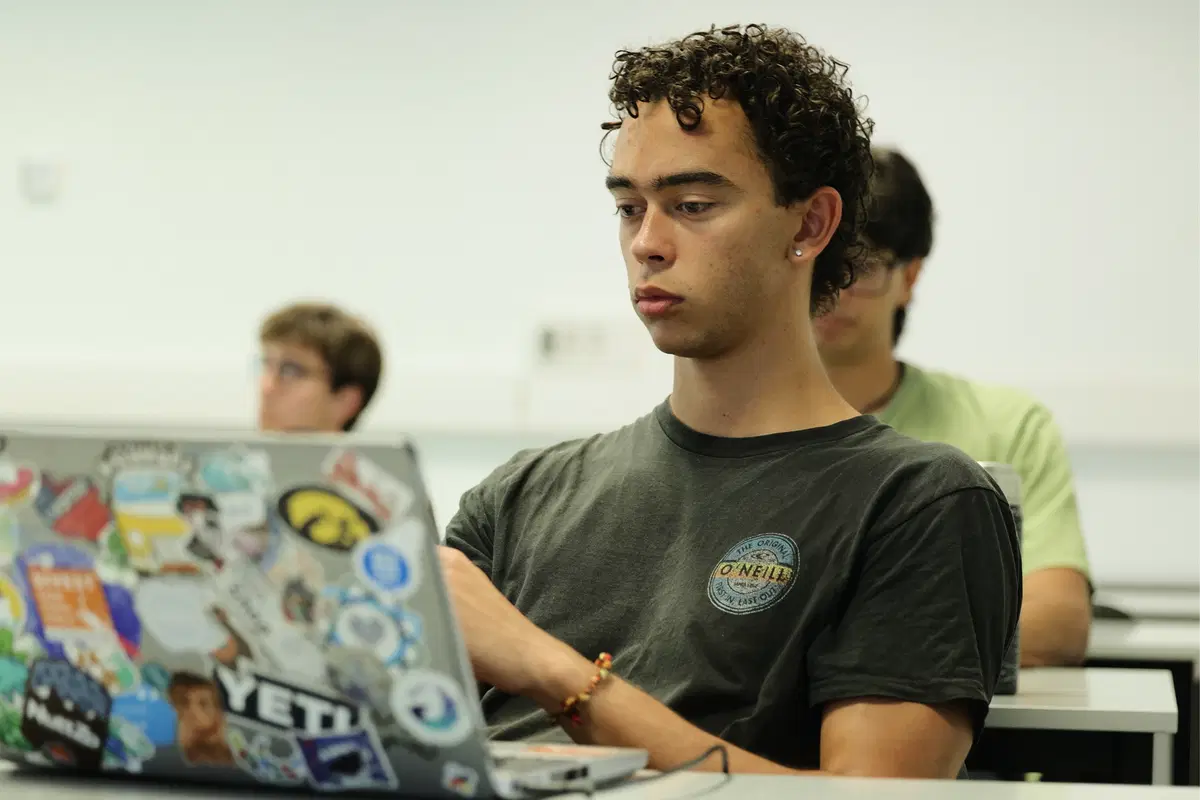
For Intake 2027 we produced student testimonial films, a brand film, longer interview films, reels and cutdowns for each platform, carousels, LinkedIn ad creatives, ad copy and programme syllabi. We filmed students in Barcelona at Universitat Politècnica de Catalunya (UPC) and ESADE Business School, and in Stockholm at KTH Royal Institute of Technology. We combined that footage with interviews from InnoEnergy’s own archive. InnoEnergy’s team ran the media. Our job was the content.
The syllabi were our way in. Producing them meant reading each programme’s course content closely. We went through hours of student interviews, asked InnoEnergy’s team a lot of questions, and kept going until we could describe the difference between the five programmes in one sentence each. That part was the hardest. The programmes share a lot of ground. Renewables come up in all of them, and grids, data and economics run through most. Finding the line that separates one programme from the next, honestly and without exaggerating, took more work than any single script.
Each subject also came with its own creative problem.
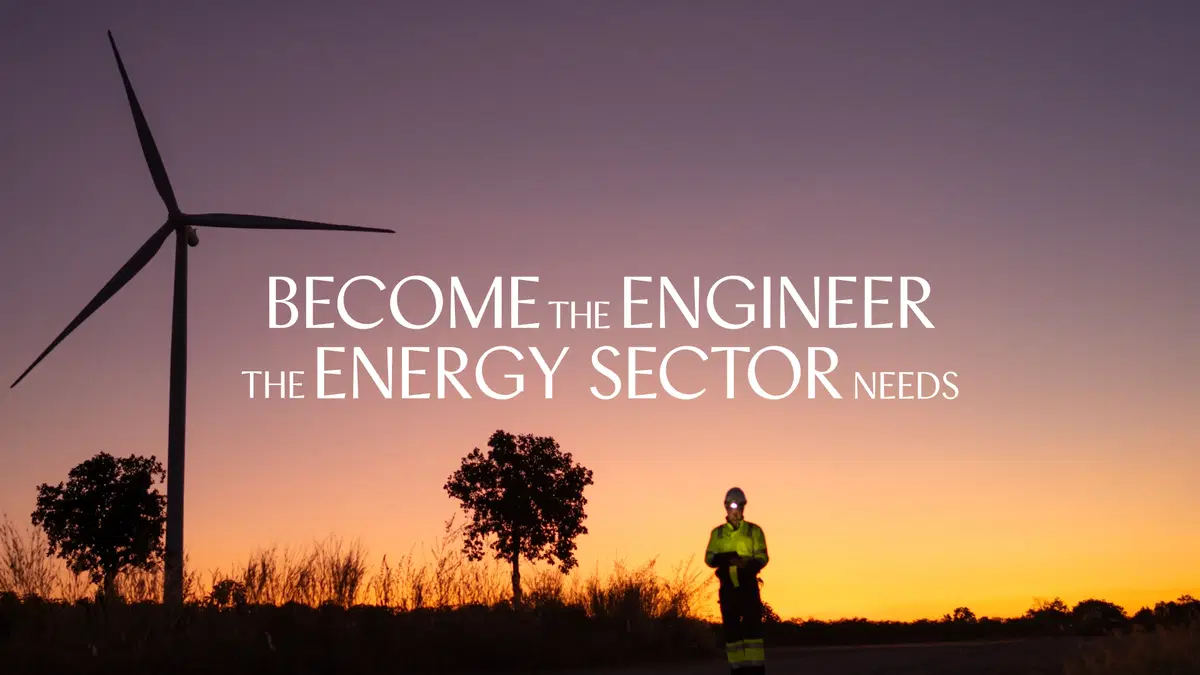
Renewable Energy is the subject everyone thinks they already know, so we skipped the turbine at sunset and showed the engineering behind it.
Sustainable Energy Systems looks at energy as a whole system, which leaves nothing single to point a camera at. The students carried this one, describing their work in their own words.
Smart Electrical Networks and Systems is about the grid, the infrastructure everyone depends on and nobody sees. The task was to make it feel urgent without turning it into a disaster story.
Advanced Energy Systems and AI had to get past a word engineers have learned to distrust. We kept the language to what the programme actually combines: energy engineering, applied AI and data science.
Nuclear Energy carries public debate with it. We left the debate alone and showed what studying the field involves, accurately and calmly.
The main lesson across all five is that you are not the expert in the room. The people reading these ads know more engineering than any copywriter. If a reel simplifies the science in the wrong place, they notice in the first few seconds and they do not come back. So we kept the subjects intact and simplified the structure. Technical terms stayed in, because to this audience they signal seriousness. What we cut was everything around them: the long introduction, the abstract promise, the second and third idea squeezed into a short video.
The second lesson is that people explain complex work better than copy does. A student describing their first-year project says more about a programme than any line we could write about the future of energy. Most of the films are built around students speaking in their own words. Our part was finding the one sentence that makes a stranger stop scrolling, and building the edit around it. On a feed you still need a hook, but in this sector the hook has to be a fact.
For a creative team in Prishtina, this was also simply good work to do. We came out of it knowing far more about renewables, grids, reactors, energy systems and machine learning than any of us expected to, and the campaign is better because of it.
One campaign for five master’s programmes
Education marketing also has to deal with the fact that one institution is rarely one message. A university usually has many programmes, and each programme has its own subject, its own strengths and its own reasons to choose it. If every programme speaks in its own separate voice, the institution dissolves into noise. If they all say the same thing, none of them feels relevant to the specific person reading it. The answer is a system, a shared identity and a clear set of rules, inside which each programme can still say something true about itself.
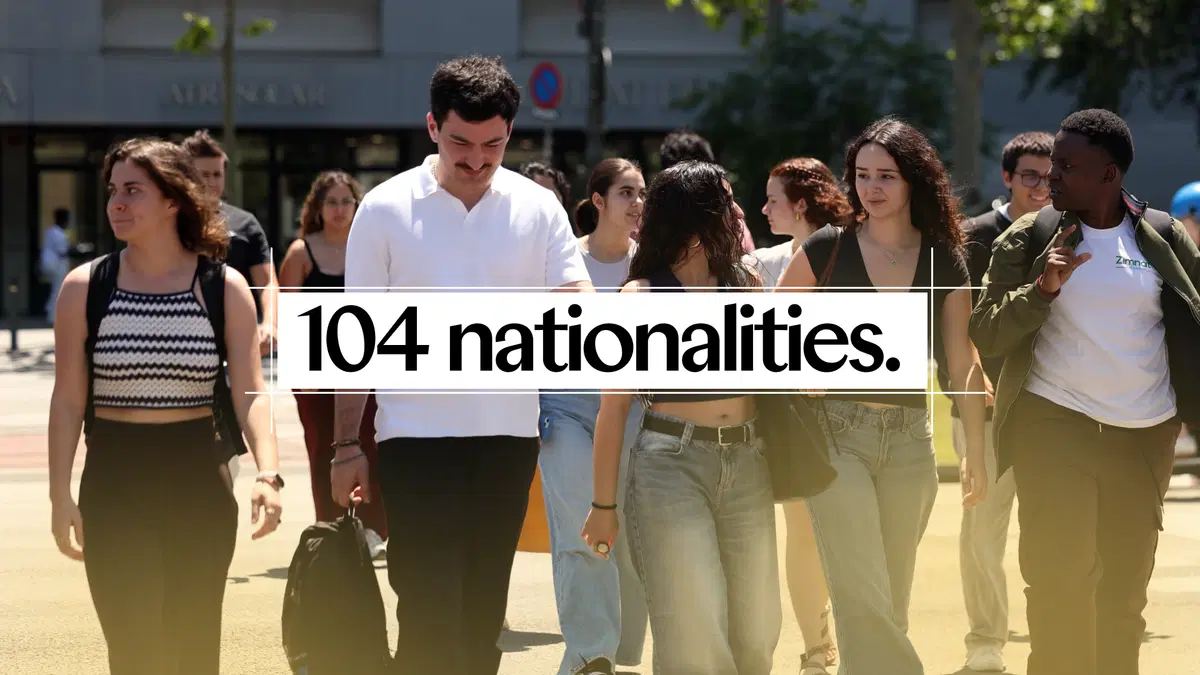
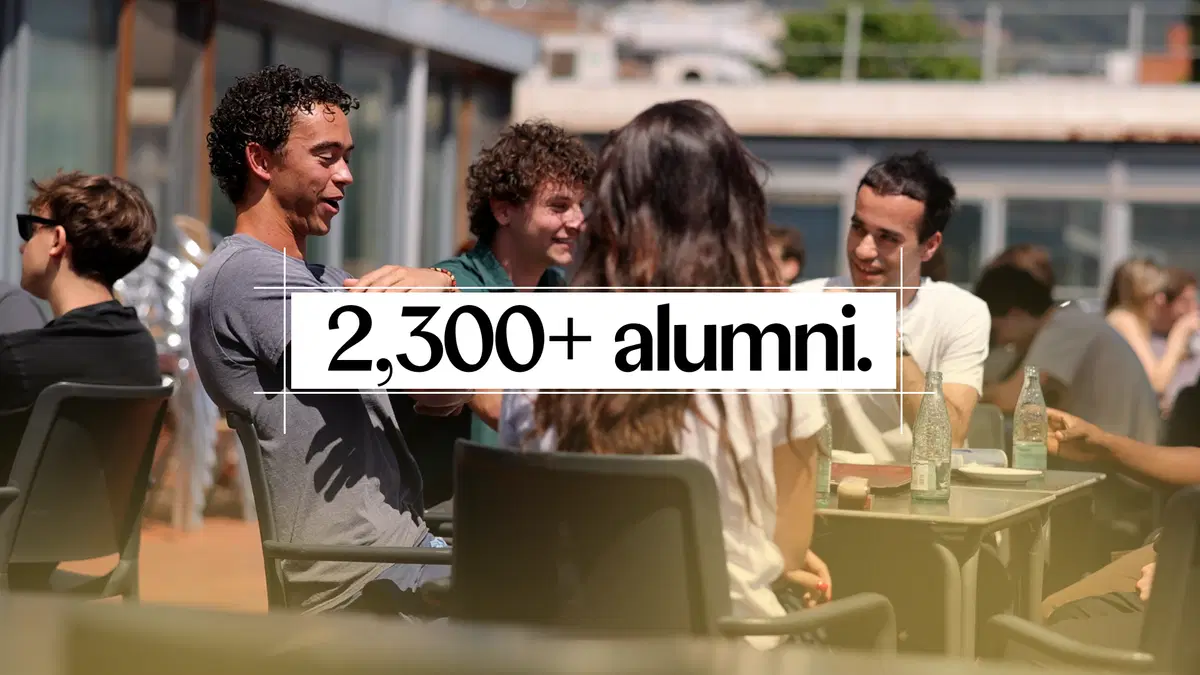
With InnoEnergy, five programmes had to feel like one campaign while staying distinct. The campaign is built on the three pillars of the Masters+ offer: Academics+, Careers+ and Community+. A student might meet one programme on LinkedIn and another on Instagram, and both had to read as the same family while still speaking honestly about what made each one different. That balance, coherent and specific at the same time, is one of the hardest and most important parts of marketing any educational institution.
Writing for applicants in different situations
The audience is never really one audience either. In education more than most sectors, the same programme is seen by people living completely different lives. Someone already studying in Europe weighs the decision differently from someone applying from the other side of the world. A message built around studying abroad lands strongly with one and means almost nothing to the other. Good education communication segments around these real differences in motivation and circumstance, not just age and location, so that each person meets a version of the message that actually speaks to them.
Talking about money honestly
Then there is money, which in education is usually the real barrier hiding behind every other objection. People talk themselves out of applying because they assume they cannot afford it, often before they have checked. How an institution talks about cost, scholarships and funding decides whether the rest of its message is believed. This is where honesty matters most. It is tempting to make financial support sound bigger or simpler than it is. The opposite works better. Say what is accurate, show a clear path to apply, and do not fill the gaps with nicer-sounding claims. An education audience reads the small print, and they trust the institution that does not make them regret it.
What we take into every education project
That is the thread through all of it. This audience checks what you tell them, because the decision is too big not to. So the most useful thing communication can do is be specific, be honest and be consistent, across every programme and every market. It is slower than writing in broad, confident strokes, and it takes some easy phrases off the table. But it is the only approach that survives contact with people who are choosing their future, and who are paying close attention while they do.
That is how we approach education clients, and the InnoEnergy work sharpened it. The job is not to make a programme sound impressive. It is to make it understood, and trusted, by the specific person deciding whether to spend the next years of their life on it.
Frequently asked questions
For the Intake 2027 student recruitment campaign, Koperativa produced the creative content across five master’s programmes in energy engineering: student testimonial films, a brand film, interview films, reels and cutdowns, carousels, LinkedIn ad creatives, ad copy and programme syllabi. The team filmed students at UPC and ESADE in Barcelona and at KTH in Stockholm.
Keep the technical language and simplify the structure. Engineers notice when science is simplified badly. Let students describe their work in their own words, lead with one concrete fact, and make sure every claim can be traced to a source.
Yes. Koperativa is based in Prishtina and works with clients across the Western Balkans and the European Union. The InnoEnergy Masters+ campaign was produced for an international audience of prospective engineering students.


About Koperativa
Koperativa is a creative and communications agency founded in Prishtina, Kosovo, in 2004. Its team of 22 works with EU institutions, international organisations and brands across the Western Balkans and Europe, and has delivered EU institutional communication work for seven consecutive years. Koperativa is a member of IPREX, the global network of independent communications agencies.